Agents
Agents that understand, decide, and act.
Create agents, connect them with your data, and deploy them in minutes.




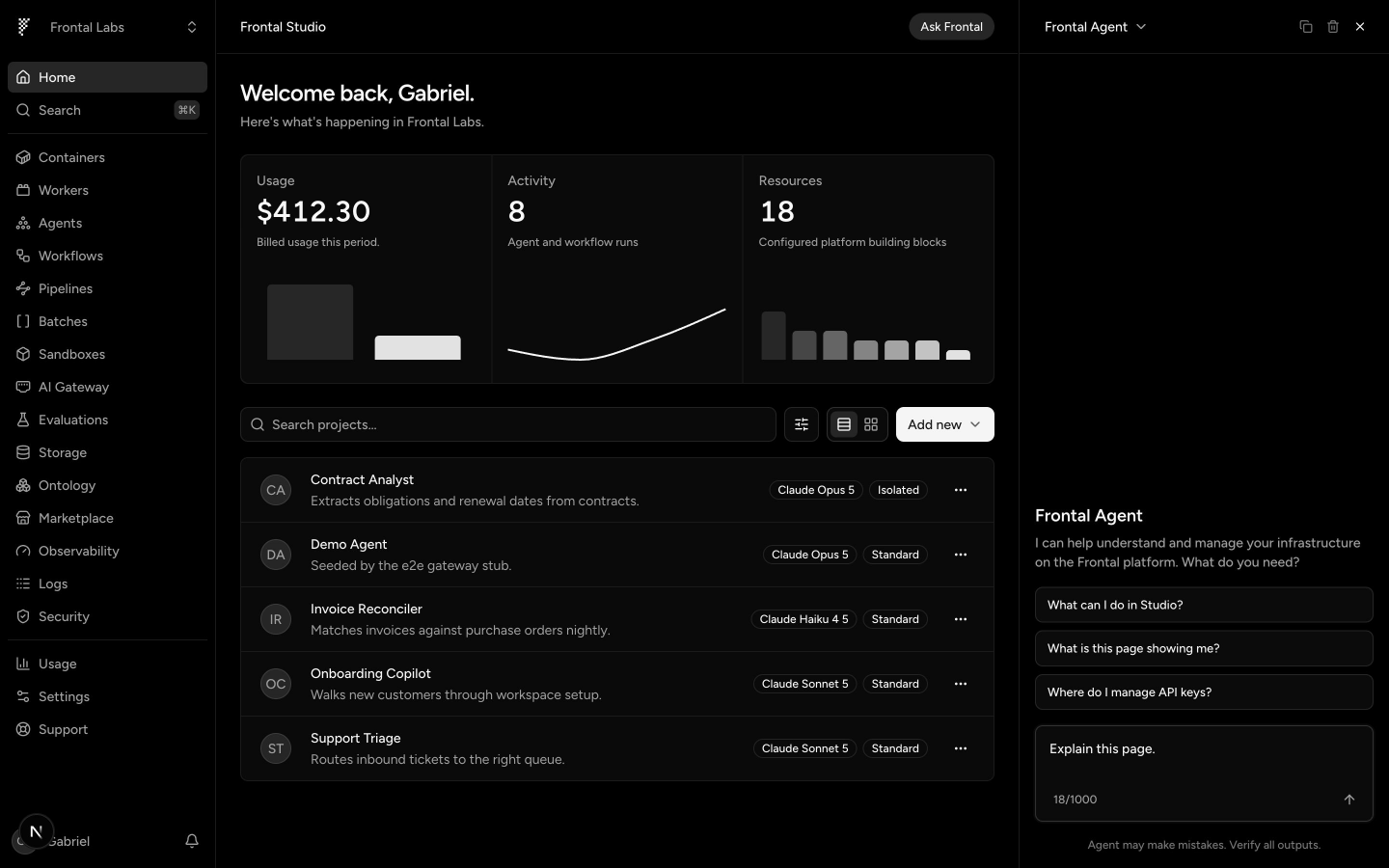
How an agent gets work done
You set the goal, the tools, and the limits. The agent chooses its path within them.
Give it a job
Describe the goal, the tools it may use, and the limits it has to respect.
Watch it work
Every decision, tool call, and hand-off is recorded as the agent runs.
What makes an agent safe to deploy
The controls that separate a demo from something you can put in production.
Typed access to your systems
Agents call the same governed tools your workflows use, never raw database access.
Grounded in your ontology
An agent resolves entities through the shared model instead of guessing at your schema.
Hands off to people
Route work to a person when judgement is required, then pick it back up with full context.
Bounded by policy
Permissions, spend, and tool access are set per agent and enforced at run time.
Remembers across runs
Durable state scoped to the agent and the entities it works on, not to a single conversation.
Measured before rollout
Test an agent against recorded cases and compare versions before you widen access.
What an agent supports
- Models
- Configured per workspace, with per-agent overrides.
- Tools
- Typed function, HTTP, and workflow calls, scoped per agent.
- Memory
- Durable state across runs, scoped to the agent and its entities.
- Limits
- Per-run ceilings on tokens, spend, and wall-clock time.
- Observability
- Every prompt, tool call, and output retained on the run.
- Concurrency
- Per-agent ceiling on simultaneous runs, with queueing once it is reached.
Before you deploy an agent
What teams ask before letting one act on real systems.
Build your first agent
Give it a goal, grant it tools, and see every decision it makes.